Introduction
Are you confused about 3D printing vs 3D scanning? Today's manufacturing world demands both technologies, yet many people misunderstand their roles. 3D printing and 3D scanning work as complementary technologies that revolutionize how businesses design, prototype, and produce products. While 3D printing creates physical objects from digital designs, 3D scanning converts real-world items into digital models. Understanding these key differences helps manufacturers, engineers, and hobbyists choose the right technology for their projects. In fact, modern production often combines both tools for maximum efficiency and precision. Let's explore how each technology works and why your business needs both.
What is 3D Printing?
3D printing builds objects layer by layer using digital designs. This additive manufacturing process starts with a digital file and gradually adds material until the final product emerges. Consequently, 3D printers work across various materials from plastics and resins to metals and ceramics.
The process begins when you load a design file (STL or OBJ format) into your printer. Next, the machine interprets the design and deposits material in precise layers. Furthermore, each layer bonds to the previous one, creating a solid three-dimensional object. The entire process happens automatically without human intervention.
Key advantages of 3D printing include:
- Rapid prototyping (from hours to days instead of weeks)
- Cost-effective small-batch production
- Complex geometric designs become feasible
- Minimal material waste compared to subtractive manufacturing
- Complete customization for individual projects
What is 3D Scanning?
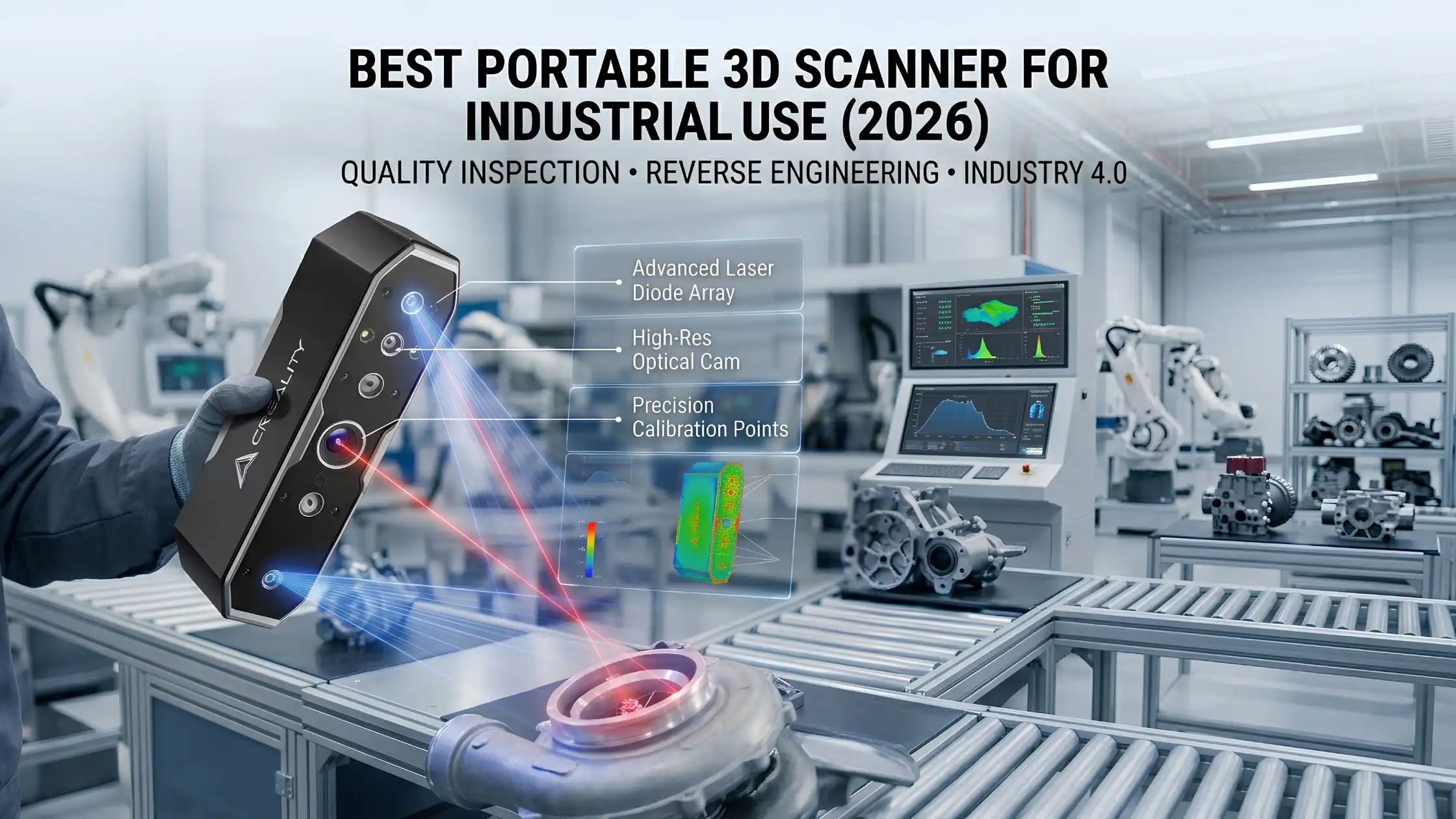
3D scanning captures the geometry of physical objects digitally. This technology transforms real-world items into three-dimensional digital models. Therefore, engineers and designers gain precise measurements and structural data instantly.
The scanning process uses various technologies laser triangulation, structured light, or photogrammetry. As a result, the scanner collects thousands of data points on an object's surface. Subsequently, specialized software processes this data into a complete 3D model suitable for analysis or modification.
Major benefits of 3D scanning include:
- Accurate reverse engineering of existing products
- Quality control and inspection automation
- Heritage preservation and digital archiving
- Custom fitting (orthodontics, prosthetics, tailored products)
- Seamless integration with CAD software
Key Differences Between 3D Printing and 3D Scanning
Understanding the distinctions between these technologies clarifies their specific applications. While 3D printing focuses on creation, 3D scanning emphasizes capture and analysis.
Process Direction
3D printing follows a digital-to-physical pathway. You start with a digital design and produce a tangible object. In contrast, 3D scanning reverses this journey physical to digital. You begin with an existing object and generate its digital twin.
Primary Function
3D printing excels at manufacturing, prototyping, and custom production. Meanwhile, 3D scanning specializes in documentation, quality assurance, and design reference. Notably, these functions support entirely different workflow stages.
Time Considerations
3D printing requires design work before production starts. However, 3D scanning accelerates the design phase by capturing existing geometry instantly. Consequently, projects combining both technologies gain significant time advantages.
Equipment Investment
Entry-level 3D printers range from ₹25,000 to ₹2,00,000+ depending on technology and materials. Meanwhile, 3D scanners typically cost more initially (₹50,000 to ₹10,00,000+), though professional-grade options exist at all price points.
Real-World Applications of 3D Printing
3D printing transforms multiple industries simultaneously.
Manufacturing & Production
Companies reduce tooling costs dramatically through 3D printing. Instead of expensive molds, manufacturers produce parts on demand. Specifically, automotive companies use this approach for custom components and spare parts.
Medical & Healthcare
Surgeons print patient-specific models for complex operations. Dental laboratories create crowns and aligners with precision. Furthermore, prosthetic manufacturers customize devices for individual patients, improving comfort and functionality significantly.
Jewelry & Fashion
Designers prototype intricate pieces before mass production. 3D printing enables personalized jewelry creation at scale. Additionally, fashion brands produce custom accessories that reflect individual customer preferences.
Education & Research
Universities accelerate learning through hands-on 3D printing experiences. Researchers prototype experimental equipment rapidly. Consequently, innovation cycles shorten considerably in academic settings.
Real-World Applications of 3D Scanning
3D scanning drives precision across diverse sectors.
Quality Control
Manufacturers scan finished products against original specifications. The software detects deviations instantly, maintaining quality standards. Therefore, defective parts get identified before shipping.
Reverse Engineering
Engineers scan competitors' products to understand design approaches. Archaeological teams digitize artifacts for preservation. Meanwhile, automotive specialists scan damaged vehicles to recreate missing components accurately.
Customization & Fitting
Orthopedic specialists scan patients' anatomy for custom implants. Eyewear companies scan facial dimensions for personalized frames. Consequently, customers receive perfectly fitted products every time.
Digital Archiving
Museums preserve cultural heritage through detailed 3D scans. Researchers create digital libraries of historical artifacts. Furthermore, these scans enable global access without handling fragile originals.
How 3D Printing and 3D Scanning Work Together
The most powerful applications combine both technologies strategically.
Consider a product redesign scenario: manufacturers scan the existing product (3D scanning), analyze the digital model, make improvements in CAD software, then 3D print prototypes for testing. This integrated workflow accelerates development cycles dramatically.
Medical professionals follow similar patterns they scan patient anatomy, design custom implants using CAD software, then 3D print the final device. Consequently, patients receive perfectly customized solutions within days.
Custom manufacturing benefits enormously from this synergy. First, scan the customer's specific requirements. Next, design solutions in the digital environment. Finally, 3D print personalized products at competitive rates. The result? Customers receive exactly what they need without generic compromises.
Choosing Between 3D Printing and 3D Scanning: A Practical Guide
Your project determines which technology you need or both.
Choose 3D printing when you need to:
- Create new products from designs
- Produce custom prototypes quickly
- Manufacture small batches cost-effectively
- Explore innovative geometries
Choose 3D scanning when you need to:
- Document existing objects digitally
- Ensure quality and precision
- Reverse engineer products
- Customize products to specifications
Combine both technologies when you aim to:
- Redesign existing products
- Create patient-specific medical devices
- Develop advanced prototypes rapidly
- Maintain strict quality standards
Investment & Cost Considerations for Indian Businesses
Budget planning matters significantly for 3D technology adoption.
Entry-level 3D printers in India start around ₹25,000 for basic FDM models. Mid-range resin printers cost ₹60,000 to ₹1,50,000, offering superior detail. Professional industrial printers exceed ₹5,00,000 but serve high-volume production needs.
3D scanners require larger investments initially. Handheld scanners range from ₹1,00,000 to ₹5,00,000. However, professional-grade systems justify costs through significant efficiency gains and quality improvements.
Consider maintenance, materials, and software licenses when budgeting. Subsequently, calculate ROI based on your specific applications. Most businesses recover investments within 12-24 months through improved efficiency.
The Future of 3D Printing and 3D Scanning
Both technologies continue evolving rapidly.
3D printing materials expand constantly from flexible polymers to conductive filaments. Printing speeds improve annually, making mass production increasingly viable. Furthermore, multi-material printing enables more sophisticated products without assembly steps.
3D scanning accuracy reaches submillimeter precision now. Artificial intelligence processes scan data faster than ever. Consequently, real-time quality control becomes standard across manufacturing.
Integration with IoT and cloud computing enables remote manufacturing workflows. This trend allows designers and manufacturers to collaborate seamlessly across distances.
Conclusion
3D printing and 3D scanning represent complementary technologies reshaping modern manufacturing. 3D printing excels at creating custom products rapidly and cost-effectively. Meanwhile, 3D scanning captures precise digital representations of physical objects, enabling quality control and reverse engineering.
Understanding their differences empowers you to choose wisely for your specific needs. Most advanced operations benefit from both technologies working in tandem scanning existing products, analyzing designs, and printing improved iterations.
Whether you run a small startup or manage enterprise manufacturing, these technologies deserve serious consideration. Ready to explore 3D printing solutions for your business? Visit 3idea.in to discover premium 3D printers from trusted brands like Phrozen, Bambu Lab, and Anycubic. Our expert team helps Indian manufacturers find the perfect equipment for their unique applications. Get started today with a consultation from our specialists!
FAQs
1. Can 3D scanning and 3D printing work together in production?
Absolutely! In fact, combining both technologies creates powerful workflows. Manufacturers scan existing products, analyze the digital models, make improvements in CAD software, then 3D print prototypes. This approach accelerates development while minimizing errors. Medical device manufacturers use this exact method for custom implants, and automotive companies employ it for parts redesign.
2. What's the typical cost difference between 3D printing and 3D scanning equipment in India?
Entry-level 3D printers start around ₹25,000, while basic 3D scanners cost ₹1,00,000+. However, pricing depends heavily on technology type and specifications. FDM printers offer affordability, while resin and industrial printers command higher prices. Similarly, handheld scanners cost less than stationary systems. Most businesses justify the investment through efficiency gains within 12-24 months.
3. Which technology should small businesses prioritize first?
Most small businesses should start with 3D printing. Reasons include lower entry costs, immediate revenue generation through custom products, and faster ROI. Once printing operations mature and volume increases, businesses typically add scanning capabilities for quality control and product development. This phased approach spreads capital investment and builds expertise systematically.